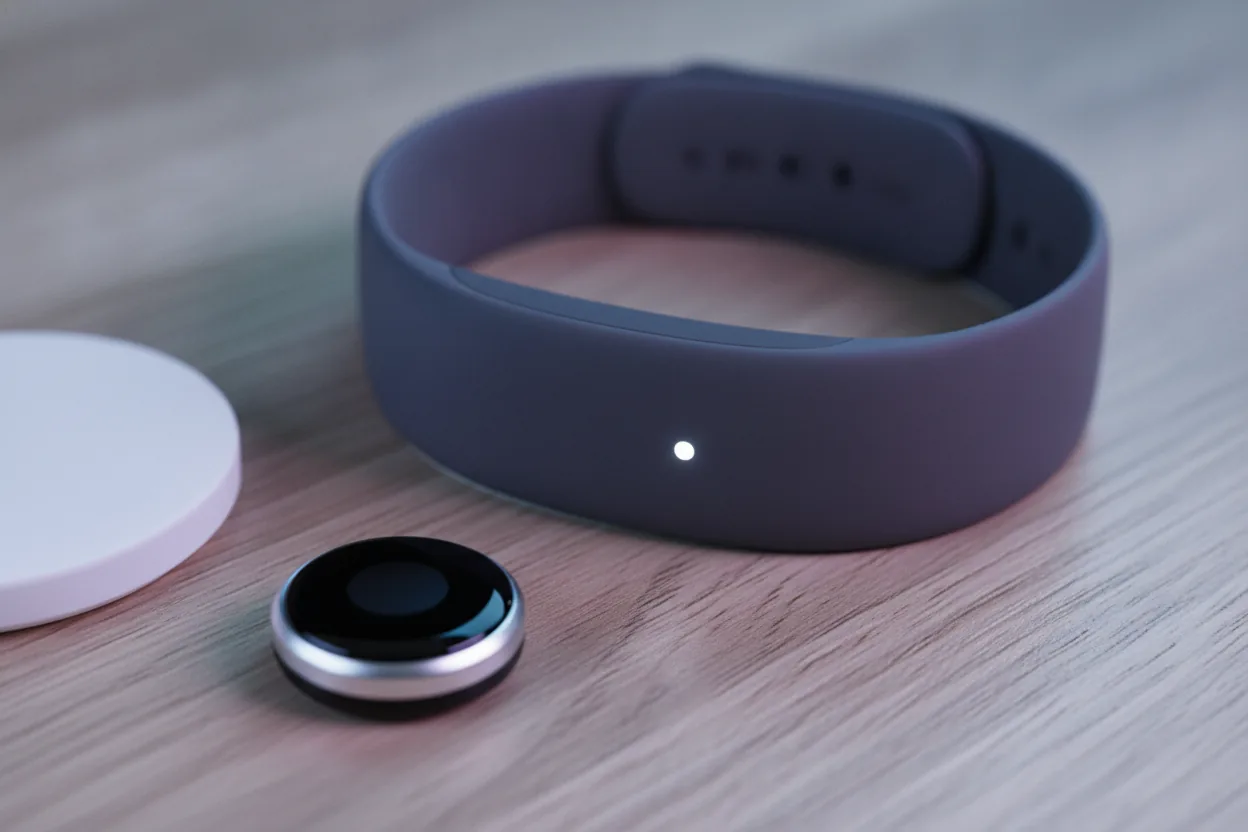
Garmin CIRQA: Architecture of a Screen-Free Health Tracking Band
Amazon killed the Halo Band in 2023 and left a real gap at the sub-$250 screen-free tracker tier. No major hardware manufacturer touched it until Garmin launched the CIRQA Smart Band in July 2026 at $199.99, no subscription required, running the same Elevate 4 optical sensor found in its flagship sport watches. The real question is whether Garmin's SDK continuity advantage and no-subscription pricing can hold their value argument against competitors when the company still hasn't published a final battery life specification.
- The Elevate 4 sensor handles continuous heart rate, pulse ox (SpO2), respiration rate, and stress tracking, all standard metrics in Garmin's current sensor generation.
- Quick-release bands use the same system Garmin standardized across Fenix and Forerunner, so third-party accessories built for those watches will work here too.
- Charging runs through the standard Garmin connector, not some CIRQA-specific cable, which matters if you already own Garmin hardware and don't want another cable in the bag.
- There's one physical button. That's it. The hardware profile sits closer to a medical-grade monitor than anything you'd call a smartwatch.
- All health data routes through Garmin Connect, stored on Garmin's platform without a paid subscription to unlock the core features.
From a developer integration standpoint, CIRQA feeds into the same Garmin Health SDK and Connect IQ ecosystem already used for Fenix, Venu, and Forerunner devices. Third-party health app integrations built for existing Garmin hardware should carry over without a full re-implementation. That's not a minor footnote. The ecosystem shows up on day one rather than forming over years the way it did for Whoop and the discontinued Halo Band, and Garmin is asking developers to rebuild exactly nothing.
The screen-free design is a deliberate product category decision, not a cost-cutting move. Garmin is explicitly targeting users who want passive 24/7 monitoring without the cognitive overhead of a display, a space where the only real occupants right now are Whoop and a graveyard. Losing the screen also eliminates one of the biggest battery drain factors in wearables, though Garmin hasn't told anyone the actual battery life number yet, which is a strange omission for a launch.
Garmin's Official CIRQA Launch in July 2026 Drives US Search Interest
Garmin launched the CIRQA Smart Band in July 2026 at $199.99, and the coverage confirmed this reached mainstream tech press, not just the enthusiast corners of the Garmin community. Tech Advisor leaked the device just before the official unveiling, which collapsed the usual pre-launch speculation cycle and pushed search volume into one concentrated window instead of the slow build most launches get. Forbes ran a "10 Top Facts" breakdown on launch day. The Verge put the no-subscription model in the headline, which tells you everything about how subscription fatigue has become a front-of-mind purchase factor in 2026.
- At $199.99 with no recurring fee, CIRQA comes in well below Whoop 4.0 on an annual cost basis. Whoop's subscription carries a significant annual cost on top of the hardware, a comparison that basically writes the marketing copy for Garmin.
- Garmin Rumors published pre-launch imagery revealing the Elevate 4 sensor, standard charging port, single-button interface, and quick-release band system before the official PR Newswire release dropped.
- Forbes framed CIRQA against the screen-free tracker category broadly, pointing to the hole Amazon left when it discontinued the Halo Band in 2023 and nobody filled it at the sub-$250 tier.
- The official Garmin PR Newswire release styled it "CIRQA Smart Band" in all-caps, which breaks from how Garmin normally names its watch products and suggests this is meant to stand as its own product line, not a watch variant.
Garmin is entering this segment at a moment when Whoop's subscription model faces growing public criticism in US fitness communities, and when Apple Watch and Samsung Galaxy Watch have both drifted further into premium territory above $300. The no-subscription positioning carries the most commercial weight at launch, doing real differentiation work at the $199.99 price. But the missing battery life specification is a genuine problem. That gap will shape the first wave of user reviews, and it's the kind of thing that makes an otherwise clean value argument feel incomplete until someone actually measures it.
Disclaimer: This analysis is based on publicly available information as of the stated publication date. Product specifications, pricing, and availability are subject to change. Readers should verify current details directly with manufacturers before making purchase decisions.